

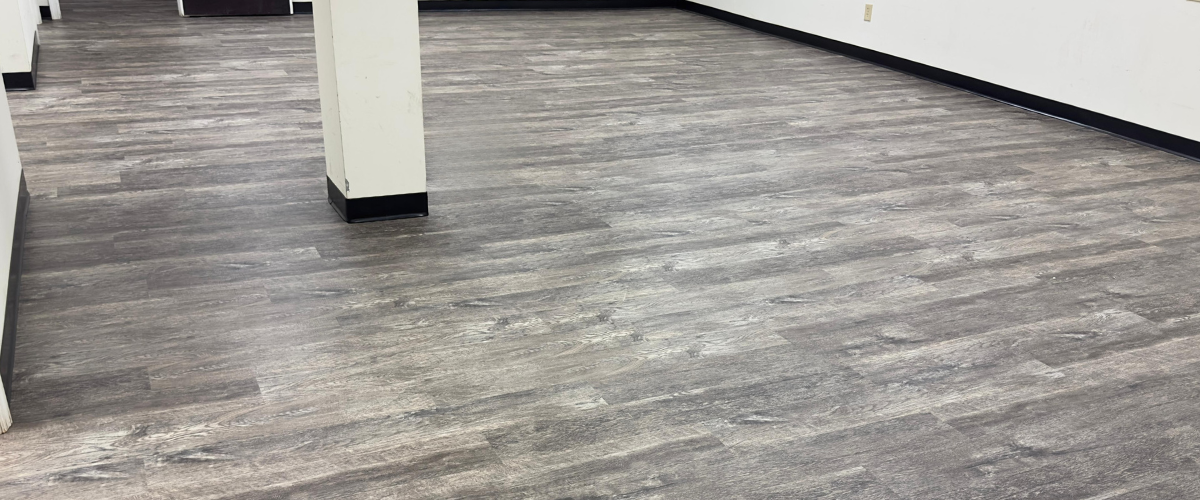
Basements come with unique challenges that make flooring selection especially important. Moisture, temperature changes, and concrete subfloors all play a role in what will perform well long-term. Choosing the right flooring for your basement means finding something durable, moisture-resistant, and comfortable for everyday living.
One of the best options for basements is luxury vinyl plank (LVP). High-quality waterproof LVP is designed to handle moisture and humidity without warping or swelling. Because most basements sit on concrete slabs, LVP’s floating installation system works especially well. It provides the look of hardwood while offering the durability and water resistance that basements require.
Tile is another excellent choice. Porcelain tile is highly resistant to moisture and extremely durable. It’s ideal for basement bathrooms, laundry areas, or finished basements that may be more prone to damp conditions. However, tile can feel cold on concrete, so some homeowners choose to add rugs or radiant heat for comfort.
Engineered hardwood can sometimes work in basements, but it’s important to ensure proper moisture control before installation. Solid hardwood is generally not recommended below grade because it can expand and contract with humidity changes.
Carpet is a mixed option. While it adds warmth and comfort, especially in basement family rooms or play areas, it can be risky in spaces with moisture concerns. If you choose carpet, moisture barriers and proper padding are essential.
Beyond material choice, moisture testing and proper subfloor preparation are critical. Even the best flooring won’t perform well if underlying moisture issues aren’t addressed first. Professional installation and preparation can make all the difference in how your basement floor holds up over time.
The right basement flooring should give you peace of mind. With moisture-resistant materials and thoughtful design choices, you can create a space that feels just as comfortable and beautiful as the rest of your home.


